
 |
| toolbar powered by Conduit |
Showing posts with label aquaruim. Show all posts
Showing posts with label aquaruim. Show all posts
24/01/2008
17/01/2008
African dwarf frog

African dwarf frogs of genus Hymenochirus, also known as dwarf aquatic frogs (ADF or DAF for short), are frogs native to Sub Saharan Africa. They are members of Family Pipidae. It is unknown if a wild population still exists.
Aquatic Dwarf Frogs live most of their adult lives underwater.[citation needed] They have hard time seeing close range but have good sight 7 cm or further.[citation needed] They rely on a sharp sense of smell and touch to find food such as tiny insects, some small fish meat,[citation needed] mosquito larvae and worms (which, in capitivity, should be fed every two days at full maturity, but every day while they are growing; a day skipped every week helps with digestion[citation needed]). They are often sold in pet shops and can live in captivity for a maximum of 10-20 years,[citation needed] most lasting an average of 7.[citation needed]
When very young, African dwarf frogs can be confused with African clawed frogs, Xenopus laevis, but may be distinguished by examining their forelimbs. The African dwarf frog has webbed forelimbs and hindlimbs, while X. laevis has webbing on the hind limbs only. African dwarf frogs are usually only an inch and a half in body length when fully grown; females are generally larger than the males. The African clawed frog, on the other hand, can reach a body length of greater than three inches.
Aquatic Dwarf Frogs live most of their adult lives underwater.[citation needed] They have hard time seeing close range but have good sight 7 cm or further.[citation needed] They rely on a sharp sense of smell and touch to find food such as tiny insects, some small fish meat,[citation needed] mosquito larvae and worms (which, in capitivity, should be fed every two days at full maturity, but every day while they are growing; a day skipped every week helps with digestion[citation needed]). They are often sold in pet shops and can live in captivity for a maximum of 10-20 years,[citation needed] most lasting an average of 7.[citation needed]
When very young, African dwarf frogs can be confused with African clawed frogs, Xenopus laevis, but may be distinguished by examining their forelimbs. The African dwarf frog has webbed forelimbs and hindlimbs, while X. laevis has webbing on the hind limbs only. African dwarf frogs are usually only an inch and a half in body length when fully grown; females are generally larger than the males. The African clawed frog, on the other hand, can reach a body length of greater than three inches.
In Captivity
housing:
The general rule for housing ADF's is that there is to be at least 1 gallon per frog. Therefore, 2 can be housed in a 2.5 or with a small peaceful fish, such as a tetras. They prefer neutral to slightly alkaline water.
Substrate:
The substrate shouldn't be small enough for the frog to accidentally eat, but not large enough that when foraging they are crushed, pinned, or drowned. Sand to medium sized gravel is appropriate, sand being more preferrable. The frogs aren't big enough to stirr up the sand, but not too small to root about to find lost food. You may want to invest in a small scavenger, such as a corydoras or otocinclus, so anaerobic conditions do not develop under the sand or gravel because of decomposing food items. To prevent the sand from clouding the water, wash in a bucket with a screen stretched atop 3 to 4 times with the coldest water possible, thereby, removing any pathogens or parasites from the substrate.
Temperature and Lighting:
These frogs are found naturally in sub-tropical conditions, so a temperature of at least 70ºF - 75ºF, with a slight drop at night to simulate nocturnal conditions. Lighting isn't a requirement but can be provided by incandescent or fluorescent lighting tubes. Again, you must simulate nocturnal conditions, so switching off the light after 8 to 12 hours is essential. If these conditions are not simulated on a regular basis, life will become stressful and unnatural for the frogs, and they will become susceptible to diseases such as red leg or dropsy.
Tankmates:
The African Dwarf Frog is suited to peaceful communities, and semi-peaceful communities. This basically means no frog nippers or predators. They can be successfully housed with Betta splendens, but males may become aggressive at any moment, so a female tankmate is a bit safer. They can be housed with small catfish, environmental conditions and habitat size permitting, such as corydoras or otocinclus. Peaceful, community tetras like the neon, cardinal, or glowlight tetras are fine, again circumstances permitting. Guppies, platies, or swordtails are good tankmates as well. These frogs are docile enough to be housed with some small crustaceans, like cherry shrimp, and, circumstances permitting, Singapore Flower Shrimp or Amano Shrimp are possible. Avoid ghost shrimp as they can cause bodily harm to the frogs. Small apple snails, such as P. brigesii, also known as Mystery Snails, are ok. They are detritivores and will not kill, nor try to eat a sleeping frog. African dwarf frogs also enjoy their own kind, of course.in some cases the african dwarf frog has been kept with tiger barbs. althougt tiger barbs are known fin nippers and will likely try to eat your frog you still can raise each other to gether as long as you have at least 6-8 tiger barbs. at the beginnig the barbs will try to eat your frog but after a while the barbs will forget and leave him alone.
Filtration:
These frogs,being air breathing animals, filtration or aeration isn't required. However, if fish are introduced, this changes and filtration is required. Excepting B. splendens, of course, whos specially adapted labyrinth organ allows the fish to take oxygen directly from the atmosphere and pass it through his or her gills. But in case it is required, power filters must not have intake big enough for the frogs' delicate legs to become trapped, therefore, drowning them. Sponge filtration is ok, but not efficient. Air stones are BAD as they can attribute to gas bubble disease, which is deadly. Undergravel filters can only be used with just that, gravel. The preferred substrate of sand prevents them from working properly, therefore, breaking your possibly expensive filter.
Feeding:
These frogs hunt by smell and will consume frozen, freeze dried, sun dried, pellet, and live foods. They're not as picky as a betta. Just make sure that the food is eaten, and not left to decompose under the sand. Also, drop an algae wafer to distract the scavengers. The scavengers, if any, will immediately go after the wafer and continue to consume it instead of the frog's food. However, if housed with ghost shrimp, this strategy is not needed, because the shrimp will drop food and flee instead of risking life or limb, then come back later for the leftovers. If an excessive amount of sand is consumed during the feeding process, put a small dish with no sharp edges into the bottom of the tank, and your frog will soon learn to come to the dish for food. (NOTE: Frozen bloodworms tend to work great.) Also, these frogs do not need to be constantly fed: feeding can be skipped every few days.
Dwarf frogs are usually killed if exposed to very large sounds, especially when they are in small tanks because the vibrations will shake the tank, like if someone was shaking a fish in a bag.
housing:
The general rule for housing ADF's is that there is to be at least 1 gallon per frog. Therefore, 2 can be housed in a 2.5 or with a small peaceful fish, such as a tetras. They prefer neutral to slightly alkaline water.
Substrate:
The substrate shouldn't be small enough for the frog to accidentally eat, but not large enough that when foraging they are crushed, pinned, or drowned. Sand to medium sized gravel is appropriate, sand being more preferrable. The frogs aren't big enough to stirr up the sand, but not too small to root about to find lost food. You may want to invest in a small scavenger, such as a corydoras or otocinclus, so anaerobic conditions do not develop under the sand or gravel because of decomposing food items. To prevent the sand from clouding the water, wash in a bucket with a screen stretched atop 3 to 4 times with the coldest water possible, thereby, removing any pathogens or parasites from the substrate.
Temperature and Lighting:
These frogs are found naturally in sub-tropical conditions, so a temperature of at least 70ºF - 75ºF, with a slight drop at night to simulate nocturnal conditions. Lighting isn't a requirement but can be provided by incandescent or fluorescent lighting tubes. Again, you must simulate nocturnal conditions, so switching off the light after 8 to 12 hours is essential. If these conditions are not simulated on a regular basis, life will become stressful and unnatural for the frogs, and they will become susceptible to diseases such as red leg or dropsy.
Tankmates:
The African Dwarf Frog is suited to peaceful communities, and semi-peaceful communities. This basically means no frog nippers or predators. They can be successfully housed with Betta splendens, but males may become aggressive at any moment, so a female tankmate is a bit safer. They can be housed with small catfish, environmental conditions and habitat size permitting, such as corydoras or otocinclus. Peaceful, community tetras like the neon, cardinal, or glowlight tetras are fine, again circumstances permitting. Guppies, platies, or swordtails are good tankmates as well. These frogs are docile enough to be housed with some small crustaceans, like cherry shrimp, and, circumstances permitting, Singapore Flower Shrimp or Amano Shrimp are possible. Avoid ghost shrimp as they can cause bodily harm to the frogs. Small apple snails, such as P. brigesii, also known as Mystery Snails, are ok. They are detritivores and will not kill, nor try to eat a sleeping frog. African dwarf frogs also enjoy their own kind, of course.in some cases the african dwarf frog has been kept with tiger barbs. althougt tiger barbs are known fin nippers and will likely try to eat your frog you still can raise each other to gether as long as you have at least 6-8 tiger barbs. at the beginnig the barbs will try to eat your frog but after a while the barbs will forget and leave him alone.
Filtration:
These frogs,being air breathing animals, filtration or aeration isn't required. However, if fish are introduced, this changes and filtration is required. Excepting B. splendens, of course, whos specially adapted labyrinth organ allows the fish to take oxygen directly from the atmosphere and pass it through his or her gills. But in case it is required, power filters must not have intake big enough for the frogs' delicate legs to become trapped, therefore, drowning them. Sponge filtration is ok, but not efficient. Air stones are BAD as they can attribute to gas bubble disease, which is deadly. Undergravel filters can only be used with just that, gravel. The preferred substrate of sand prevents them from working properly, therefore, breaking your possibly expensive filter.
Feeding:
These frogs hunt by smell and will consume frozen, freeze dried, sun dried, pellet, and live foods. They're not as picky as a betta. Just make sure that the food is eaten, and not left to decompose under the sand. Also, drop an algae wafer to distract the scavengers. The scavengers, if any, will immediately go after the wafer and continue to consume it instead of the frog's food. However, if housed with ghost shrimp, this strategy is not needed, because the shrimp will drop food and flee instead of risking life or limb, then come back later for the leftovers. If an excessive amount of sand is consumed during the feeding process, put a small dish with no sharp edges into the bottom of the tank, and your frog will soon learn to come to the dish for food. (NOTE: Frozen bloodworms tend to work great.) Also, these frogs do not need to be constantly fed: feeding can be skipped every few days.
Dwarf frogs are usually killed if exposed to very large sounds, especially when they are in small tanks because the vibrations will shake the tank, like if someone was shaking a fish in a bag.
16/01/2008
Ichthyophthirius multifiliis
 this betta has one imbetween his eyes
Ichthyophthirius multifiliis is a species of ciliate protozoan which parasitizes freshwater fish. It is probably the most common aquarium fish disease and there are few Aquarists that have not met it on one or more occasions[1]. "Ich" (the colloquially abbreviated form of the name) is the largest known parasitic protozoan found on fishes. Adult organisms are oval or round and measure 0.5 to 1.0 mm in size. The adult is uniformly ciliated and contains a horseshoe-shaped nucleus which can be seen in older individuals. The disease it causes is usually called ich or white spot, and becomes especially serious in enclosed areas, where it spreads quickly from one fish to another. Ich is the disease responsible for the most fatalities in freshwater aquarium fish and can cause notable damage to aquaculture. Marine ich is caused by a different ciliate, Cryptocaryon.
After approximately one week of parasitism, mature trophozoites leave their host, settle to a substrate and secrete a cyst. The encysted cell, called a tomont, undergoes rapid division over approximately twenty-four hours to produce 600-1000 daughter cells called tomites. Once these reach maturity, they exit the cyst and develop into a theront stage, which is highly mobile. Theronts then infect new fish, digging their way into exposed parts, under the scales, or more commonly into its gill plate. The entire life-cycle takes about seven to ten days to complete.
Prevention
It is important to note that the Ich parasite is in almost every tank, prevention is key to avoiding an outbreak. Preventative measures against ichthyophthirius include buying only healthy fish from reputable dealers, proper acclimatization techniques (no one elses water goes in your tank), separating already sick fish from healthy fish through quarantine, maintaining high water quality, and not overstocking. Adding aquarium salt to aquarium water (according to the directions which should be available on an aquarium salt package) should also prevent ich. However, care should be taken, as not all freshwater fish can handle salt in their water. Some fish called "skin fish" like most loaches, and even some catfish are very susceptible to burning from the salt.
Predisposing factors
Ich outbreaks usually occur when new fish are introduced or during times of stress. Elevated ammonia or nitrate levels or sudden changes in temperature can also bring about a latent infection.[dubious – discuss] A sudden chilling of the fish, which can easily occur when they are being transported, is often sufficient to take the parasite from its latent state to the reproductive phase.[dubious – discuss]
Diagnosis
Typical behaviours of ich infected fish include:
Anorexia (loss of appetite, refusing all food, with consequential wasting)
Hiding abnormally
Flashing
Rubbing and scratching against objects
Tropical fish are vulnerable to a large variety of diseases. As such, ich treatment should not be applied unless one or more of the fish is exhibiting the characteristic white spots.
Skin
Ich infections are usually visible in the form of characteristic white spots on the side of the fish. The white spots are pockets of fish epithelia containing Ichthyophthirius cells called trophozoites or trophonts, which feed on the tissues of the host and may grow to 1 mm in diameter. A smear should show ciliates if white spot is present.
Fins
Fins are folded and show white spots about 1 mm in diameter.
Eyes
Eyes may appear cloudy or milky.
Gills
Gill infection will cause breathing at the surface and fast respiration. Gill examination may show numbers of such white spots. Wet mount of a Gill Biopsy may show I. mutifiliis trophozoites.
Treatment
Any treatment method must take into account the species of fish (some will not tolerate certain medications), how high the infection rate is, and the size and type of environment.
If it is detected before it becomes too serious, a number of different treatments can be applied. Only the free-swimming stage of the parasite is susceptible to treatment; neither the trophonts under the epithelium nor the tomont cysts can be killed.
Heat treatment
Heat treatment can be highly effective, and it can be combined with other treatments.
The three phases of the ichthyophthirius life-cycle (Adult, Cyst, Free swimming) take about 4 weeks at 21 °C (70 °F) to complete but only 5 days at 80 °F. For this reason it is recommended that the aquarium water be raised to 28-30 °C (82-86 °F) for the duration of the treatment. Avoid fast temperature changes; water temperature should be raised or reduced gradually 0.5-1 °C (1-2 °F) per day. There are species of fish that will not tolerate the high end of temperatures needed to be effective. If the fish can stand it, raise the temperature even higher, up to 30 °C (86 °F). Raising the temperature also, presumably, reduces and kills the free swimming parasite. It is important to remember that raising the temperature higher, but not high enough so that the parasite is killed, should be used in conjunction with some sort of medication. The heat speeds up the life cycle of the ichthyophthirius, which is useful if the fish is being medicated, because otherwise the parasites simply reproduce at a faster rate, and kill the aforementioned fish quicker.
Salt
In small tanks, the most recommended method of treatment for ich consists of adding aquarium salt until a specific gravity of 1.002 g/cm³ is achieved, as the parasites are less tolerant of salt than fish. This is not practical in ponds because even a light salt solution of 0.01% (100 mg/L, 272 lb/acre-foot), would require large quantities of salt. Fish can be dipped in a 3% (30,000 mg/L) solution for thirty seconds to several minutes, or they can be treated in a prolonged bath at a lower concentration (0.05% = 500 mg/L). Salt at low concentrations (0.01 to 0.05% solution) is an excellent[citation needed] means of controlling "Ich" in recirculating systems without harming the biofilter. Care should be taken to avoid damaging aquatic plants and salt intolerant fish. In particular, do not use salt with sensitive soft water Tetras such as Neons, Cardinals and Glow-Lights or scaleless Catfish (which can be easily burned if salt is not pre-dissolved)[citation needed].
Salt treatment can be combined with heat treatment.
Chemical treatments
Chemical treatments include formalin, malachite green, chelated copper, copper sulfate, potassium permanganate and Quinine Sulfate. Because they can be harmed by these treatments, certain plants and invertebrates, such as snails, should be removed before application. There are also a large number of proprietary treatments available for the treatment of white spot, and the related Oodinium (velvet disease). Although based on the chemicals mentioned above, they are generally considered to be better for the safety of both the aquarist and fish than the pure chemical form of the treatment. All treatments target the free-living theronts and tomonts, which only survive about two to three days in the absence of a host fish, so treatment should be continued until a few days after the last white spot has disappeared from the fish. This will usually take about a week; 10 days is typical at 27 °C (80 °F) and 6 days at 29 °C (84 °F).
Fish transfer
Ich can be treated with a transfer method. Fish are moved daily into a different tank with clean, conditioned, warmed water. Parasites that fall off of the fish are left behind in the tank. After moving the fish daily for 7-10 days, the fish (presumably cured) can be put back into the main tank. The disadvantage of this method is that it stresses both fish and fishkeeper.
Gravel Vacuuming
Vacuuming the surface of the gravel with a siphon device can remove the parasite at cyst stage. Try not to stir up the water too much as it just blows the cysts all over.
Cautions
All medications, to some degree, are toxic not only to the parasite but also to the fish. Grossly weakened fish will not tolerate medication that more robust and less infected ones may. Bottom feeders such as catfishes, scaleless fish, and many tetras are adversely impacted by the use of malachite green.
Malachite green is hazardous to handle: it is known to cause cancer, mutations, and is harmful to fetuses. Gloves and a protective mask should always be worn when handling the concentrated powder. Pregnant women should never handle this chemical. There are claims that malachite green might increase in toxicity to fish as the temperature increases. You may want to reconsider your decision to use malachite green if you intend to raise the temperature at the same time, or if you already maintain your temperature at a higher level than normal. Malachite green also tends to stain the plastic and silicone in the aquarium.
Prognosis
If the disease is diagnosed early and effectual treatment is applied, the outlook is excellent. However if the infestation is at an advanced stage, mortalities should be expected. Note that when a fish has been cured from Ich, it will usually form an immunity to the infection.
Bath treatment (fishkeeping)
Bath treatments are disease treatments that originated since the earliest days of goldfish culture. They are easy to carry out. One of the most effective procedure is called the salt bath which is quite effective in eradicating ciliated parasites from the fish. However, there are also useless, thus not recommended, bath treatments such as the use of certain antibiotics or vitamins in the bath. One disadvantageous limitation of bath treatments is that it harms the beneficial bacteria in the biological filter of the aquarium.[1]
Bath treatment can either be short-term (a "dip") or long-term (from a few hours to 12 or 24 hours or longer).[1]
Medications used in bath treatments
Salt: the most effective bath treatment, and is used to eliminate ciliated protozoan parasites (including ich in small fish); also used to curb the absorption of nitrite, and to reduce the osmotic pressure exerted by fresh-water on any hole in the skin or gill; Dosage and dosing: To produce a 0.3% salt solution (a treatment dosage against most protozoan parasites), 1 tablespoon of salt is used per gallon of water; to produce a 0.6% salt solution (a treatment dosage against Trichodina), 2 tablespoons of salt for every one gallon of water; and to produce a 0.9% salt solution, 3 tablespoons of salt for every one gallon of water[1]
Acriflavine: a powerful dye used for treating protozoans, fungus, lymphocytes, Oodinium and Hexamita[1]
Chloramine T: a quarternary ammonium compound used to control bacterial gill disease and flukes[1]
Ionic copper: free-form copper used to kill bacteria and parasites[1]
Dimilin: an insecticide used against Lernea, Argulus and Ergasilus[1]
Droncit: a pill form of praziquantel used to clear flukes and worms[1]
Flagyl: this is actually metronidazole and is a treatment of choice for Hexamita and Spironucleus[1]
Fluke Tabs: used against fluke infestation[1]
Formalin: this is formaldehyde gas in water used to as a fungicide and treatment against some bacterial infections, ciliated protozoans and flukes[1]
Furazone green: a combination of 2 or 3 furan antibiotics[1]
Malachite green: a powerful dye that eliminates parasites[1]
Methylene blue: a basic thiazine dye used to treat fungal infections[1]
Pond Health Guard: a modified version of formalin used to treat flukes[1]
Potassium permanganate: a caustic alkali that is effective in treating flukes, fungal infections, bacterial gill disease, bacterial infections of the body and fins, and ciliated protozoans infestations except ich[1]
Program: is actually lufenuron which is effective against Argulus, Lernea and Ergasilus[1]
Tramisole: is actually levamisole phosphate which is a deworming medication[1]
http://en.wikipedia.org/wiki/Bath_treatment_%28fishkeeping%29
Fin rot
Fin rot is a symptom of disease in fish; it is not hard to treat, and the fish usually will survive. Most common in the fancy varieties of goldfish and Bettas, fin rot can occur as a result of an injury, as a secondary infection once the fish has been weakened by another disease, or in some cases, as a primary infection (bacterial (Pseudomonas fluorescens) ).
Fin rot can be the result of a bacterial infection (which causes a more ragged rotting), or as a fungal infection (which rots the tail more evenly and is more likely to produce a white 'edge'). Sometimes, both types of infection are seen together. Infection is commonly brought on by bad water conditions, injury, poor diet, or outwintering fancy goldfish (who should live in warmer temperatures).
Fin rot starts at the edge of the fins, and destroys more and more tissue until it reaches the fin base. If it does reach the fin base, the fish will never be able to regenerate the lost tissue. At this point, the disease may attack the fish's body directly. This infection can happen overnight without warning.
http://en.wikipedia.org/wiki/Fin_rot
Enteric redmouth disease
Enteric redmouth disease, or simply redmouth disease is a bacterial infection of freshwater and marine fish caused by the pathogen Yersinia ruckeri. It is primarily found in rainbow trout (Oncorhynchus mykiss) however, and is characterized by subcutaneous hemorrhaging of the mouth, fins, and eyes. Hemorrhaging also occurs on internal organs, and in the later stages of the disease the intestines become filled with a yellow fluid. Redmouth disease was first discovered in Idaho rainbow trout in the 1950's.[1]
Some fish species serve as vectors for the disease and have subsequently spread the pathogen to other parts of the world.[1] An example is the fathead minnow (Pimephales promelas) which is responsible for the spread of redmouth disease to trout in Europe.[2] Other vectors include the goldfish (Carassius auratus), Atlantic and Pacific salmon (Salmo salar), the emerald shiner (Notropis atherinoides), and farmed whitefish (Coregonus spp.). Infections have also occurred in farmed turbot (Scophthalmus maximus), seabass (Dicentrarchus labrax), and seabream (Sparus auratus).[1]
There are several antibiotics available for the treatment of redmouth disease in fish. The disease does not affect humans.[1]
http://en.wikipedia.org/wiki/Enteric_redmouth_disease
Fish Dropsy
.jpg)
Symptoms
This disease is characterised by a swollen or hollow abdomen (Ascites). A concentration of fluid in the body tissues and cavities causes the fish's abdomen to become swollen and appear bloated. Swollen areas may exhibit a 'pine-cone' appearance caused by the fishes scales sticking out. You can best see this by viewing your fish from the top. Fish may also stop feeding, appear off-colour, become listless and/or lethargic, have sunken eyes, and hang at the top or stay at the bottom of the aquarium.
The condition affects the fish's internal organs, ceasing proper function.
Gouramies, Cyprinids (barbs, danios, etc), guppies, betta and goldfish are prone to this disease.
Causes
Dropsy is fairly easy to diagnose non-specifically, however, it is much harder to diagnose the cause. The main cause is bacterial infection. The causative agent may be introduced through food or dirty water. Edema second to kidney failure or ascites due to liver or heart failure are other possible causes.
Treatment
Dropsy is not very contagious; however, if a fish is diagnosed with dropsy, it is important to remove it from the aquarium as soon as possible. If there are multiple fish, treat the afflicted fish in a specially established "sick tank" (Quarantine). Dropsy can spread from the ill fish, possibly causing stress among the other fish in the tank community. This extra stress may make the others vulnerable to dropsy or other forms of disease.
Treatment may consist of antibiotics targeting the causative agent. They work best in the very early stages of dropsy. A more hands-on approach is to raise the aquarium's temperature a few degrees - slightly higher than usual. Adding Epsom salts (Magnesium sulfate) to the water at (a rate of 20 mg/L)helps to encourage the fish to expel unnecessary damaging fluids.
Prognosis
Prognosis of fish dropsy is not good. By the time fish has swollen up enough that the scales begin to raise, the internal damage may be too extensive to repair. Most cases of dropsy are fatal. However, if the fish is placed in a quarantine tank and treated with a broad spectrum antibiotic or a bacterial remedy from any aquatic sales shop, then the fish can make a full recovery in less than a week.
Prevention
Maintaining water quality is always extremely important. It should always be checked first, because it is often the cause of disease in aquarium fish. Frequent water changes can work to prevent the spread of disease by "watering down" the concentration of disease agents, and by reducing stress on the tank occupants.
All tanks need a 10-25% water change on a weekly basis. The best method of changing water is siphoning the water from the bottom, removing debris and fecal matter from the gravel.
Always feed fish from reliable sources and use high quality food. Varying diet is also important.
http://en.wikipedia.org/wiki/Fish_Dropsy
15/01/2008
Bloater
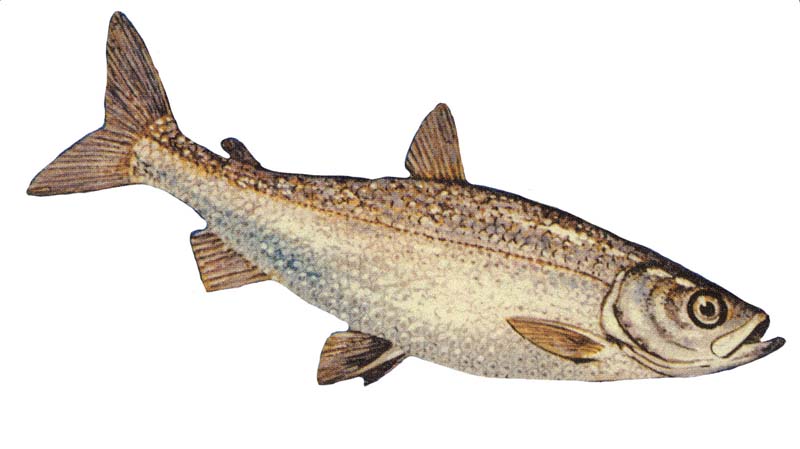 The bloater (Coregonus hoyi) is a freshwater fish native to the Great Lakes. It is silver in color with a pink and purple iridescence and reaches an average length of 9 inches (23cm).
In British cuisine, the bloater is, like the kipper, a type of smoked herring, but is differentiated from the kipper by the fact that fish is smoked whole, with its innards intact. According to George Orwell in The Road to Wigan Pier, the Emperor Charles V erected a statue to the inventor of bloaters.
14/01/2008
Tinfoil barb
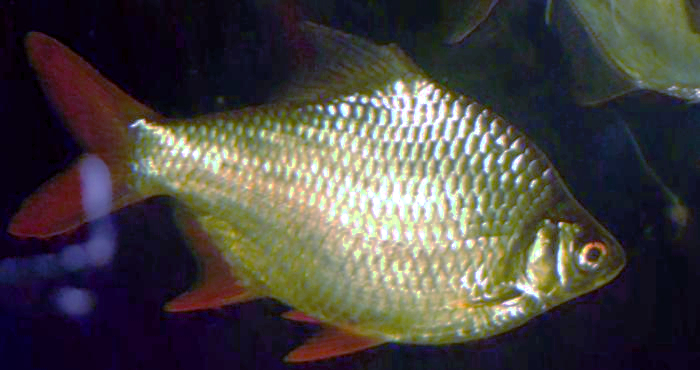 The tinfoil barb (Barbonymus schwanenfeldii) is a tropical freshwater fish belonging to the Barbonymus genus of the Cyprinidae family. Originating in the Mekong and Chao Phraya basins of Thailand, and Sumatra, Borneo, and Malayan peninsula. This species was originally named Barbus schwanenfeldii by Pieter Bleeker in 1853, and has also been referred to as Puntius schwanenfeldii, Barbodes schwanenfeldii, and the specific epithet has also been referred to as schwanefeldii.
It is distinguishable from other species of the genus in having a red dorsal fin with a black blotch at the tip, red pectoral, pelvic and anal fins, red caudal fin with white margin and a black submarginal stripe along each lobe, and 8 scale rows between dorsal-fin origin and lateral line. Large individuals are silvery or golden yellow while alive with its dorsal fin red and caudal fin orange or blood-red. It grows up to 14 inches (35 cm) in length. Tinfoil Barbs have a lifespan of 8 to 10 years.
The tinfoil barb is found in rivers, streams, canals, and ditches. It also enters flooded fields. Its natural habitat is in water with a 6.5–7.0 pH, a water hardness of up to 10 dGH, and a temperature range of 72–77 °F (22–25 °C). In Indonesia, a temperature range of 20.4°C to 33.7°C was recorded for this species. It is largely herbivorous, consuming aquatic macrophytes and submerged land plants, as well as filamentous algae and occasionally insects. It also feeds on small fishes, worms, and crustaceans.
The tinfoil barb is commercially important in the aquarium hobby trade, as well as commercial aquaculture, subsistence farming, and occasionally as bait. It is usually marketed fresh.
There are no obvious distinquishing characteristics used to determine the sex of the fish. They reproduce by egg scattering of several thousand eggs per spawning. They are not often bred in captivity for the aquarium trade due to their large size.
In the aquarium
The tinfoil barb is a schooling species that prefers to be placed with a number of its own species. It prefers living in water with strong currents similar to those found in their native streams. It is also recommended that they be kept with fish of similar size or larger. Many unwary aquarists buy young specimens and find out too late how large the tinfoil barb can grow. The tinfoil barb is often seen in large aquaria as companions to large cichlids e.g. the oscar cichlid, Astronotus ocellatus. The presence of groups of active fish like the tinfoil barb, sometimes known as dither fish, helps mitigate aggression in more intolerant companions.
The tinfoil barb is an active, peaceful species that spends most of its time in the mid-level and bottom of the water. A greedy eater, it will attempt to fill its mouth with as much food as possible during feedings. In captivity, it will eat almost anything provided to it.
The tinfoil barb is an active, peaceful species that spends most of its time in the mid-level and bottom of the water. A greedy eater, it will attempt to fill its mouth with as much food as possible during feedings. In captivity, it will eat almost anything provided to it.
 A school of tinfoil barbs
http://en.wikipedia.org/wiki/Tin_Foil_Barb
10/01/2008
Clown loach
 The clown loach, Chromobotia macracanthus, or tiger botia is a tropical freshwater fish
belonging to the Cobitidae (loach) family. It is the sole member of the Chromobotia genus. It originates in inland waters in Indonesia on the islands of Sumatra and Borneo. It is a popular fish in the freshwater aquarium trade and is sold worldwide. [1]
Taxonomy and naming
The fish was first described as Cobitis macracanthus by Pieter Bleeker in 1852. In 1989, the scientific name was changed to Botia macracanthus.[2] In 2004, Dr. Maurice Kottelat split the Botia genus, containing 47 different species, into seven separate genera, resulting in the clown loach being placed into a genus of its own, Chromobotia.[3]
The genus Chromobotia derives its name from the Greek word chromo, meaning "color", and the regional Asian word botia, meaning "warrior" or "soldier". The specific epithet macracanthus is derived from the Greek word macros, meaning "large" and the Latin word acanthus, meaning "thorny", referring to the large spines below the fish's eyes. The "Clown loach" common name comes from the fish's bright colors resembling a clown's makeup, and the fish's ability to entertain observers with its comical behavior when kept in an aquarium.[2]
Description and behavior
Information about the maximum size of the clown loach varies, with some estimates ranging from 11 to 14 inches (40 to 50 cm), and with typical adult sizes ranging from 7 to 10 inches (15 to 20 cm).[4] The fish's body is long and laterally compressed, with an arched dorsal surface and a flat ventral surface. Its head is large and its mouth faces downward with thick, fleshy lips, and four pairs of barbels. The barbels on the lower jaw are small and difficult to see.
The body is whitish-orange to reddish-orange, with three thick, black, vertical bands. The first band runs from the top of the head and through the eye. The second band lies between the head and the dorsal fin, and wraps around to the belly, and the third band covers the start of the caudal peduncle and extends to the anal fin. There is some regional color variation in the species; the pelvic fins on fish from Borneo are reddish orange and black, while the pelvic fins on fish from Sumatra are entirely reddish orange.[5]
The fish is sexually dimorphic, with females being slightly plumper than males. In addition, the tips of the tail on the male curve inwards slightly, whereas the females have straight tips.[2]
The fish has a movable spine that lies in a groove below the eye, which may be extended as a defense mechanism.
Diet
The clown loach is a bottom-dwelling omnivorous fish. In the wild, its diet primarily consists of the food it is able to find on the substrate, including snails, crustaceans, worms, freshwater shrimp, vegetable matter, and aquatic insect larvae.[4] In the aquarium it can mainly be fed carnivore pellets and bloodworms. It will also readily accept flake food that is floating around and it will also eat snails or other small invertebrates. A younger 3 inch clown loach can't consume tablets. Red insect larve can cause digestive errors.
Distribution and habitat
Clown loaches originate in Indonesia, on the islands of Sumatra and Borneo. For the greater part of the year, the fish lives in murky or blackwater rivers and lakes, but breeding adults migrate to smaller waterways to spawn annually.[4] They are especially predominant in the flood plains of the hill country.[6]
In its native habitat, the fish is found in water with a temperature range of 77 to 86 °F (25 to 30 °C), a pH between 5.0 and 8.0, and water hardness between 5 and 12 dH.[1]
In the aquarium
A harmless, very active, social fish, they are best kept in groups of 3 or more and due to their potential size a 50 gallon aquarium should be the minimum size used. These fish have bifurcated subocular (located under the eyes) spines, which are used as a defence mechanism. If a loach deploys its spines while caught in a net, untangling it is difficult and can cause severe injury. It is also a good idea when moving larger specimens to double or triple bag them or use a solid container. Some owners have been stabbed while trying to catch or touch these fish. When kept in groups smaller than 5, they may spend more time hiding under obstacles in the water.
They are also found to make clicking noises when excited or eating. Sometimes they lie on their sides on the bottom of the tank or swim upside down and appear to be dead. This is a common event and the aquarist should be aware of this fact or unnecessary removal may occur.
If you have noticed that your clown loaches do not come out of hiding, there are some easy things to adjust so that your clown loaches will be more comfortable. A good tank setup for a clown loach should include ample shade, plants (plastic or real), hiding places and other peaceful fishes. Make sure the environment is not too bright. Provide shade from tank lighting. The tank should not be next to a window. Clown loaches are keen observers of other fish in the aquarium; they observe and react accordingly. If other fish are skittish and hide, clowns will observe this and do the same. Make sure that other fish in your community tank are docile and not prone to hide.
Because clown loaches come from rivers and streams, they are accustomed to having other fishes and plants in their environment. Not having plants and/or other fishes can cause clown loaches to become stressed and to go into hiding. Another important thing to remember is that since they do come from a fast moving river environment, they need a tank with lots of clear, well filtered and fast moving water which can be achieved with proper filtration and the use of powerheads. Before introducing clown loaches to your tank, make sure the fish you currently have are compatible because aggressive fish will stress your clown loaches and may need to be removed. Clown loaches are particularly susceptible to Ichthyophthirius (ich), so they must be watched closely when initially introducing them to a tank and when new fish are added. Ich usually deals the typical clown loach a poor prognosis since the standard treatment is especially toxic to the clown's "skin-type" and the dose must be halved and is therefore less effective.
A variety of food should be provided for clown loaches, and their behaviour should be observed during feeding. In a community tank other fish may take the food before it reaches the bottom, where the clown loaches feed. Most clown loaches accept commercial flake food and sinking pellets as their dietary staple, but thrive with a variety of food: live (worms, brine shrimp, small snails), plant matter, freeze-dried (tubifex worms, especially if it is fortified) and frozen brine shrimp (always thaw frozen food to aquarium temperature).
Clown loaches are also regarded as a natural way of controlling an infestation of small snails in the aquarium. This being said, a person considering them for this purpose must also consider their future needs with regard to a large aquarium. A person getting clowns to remove snails in a smaller tank might be better served with one of the many other botia species that are as effective at the task but remain much smaller. Despite that utilitarian purpose, clown loaches are usually kept for reasons of appearance and personality.
http://en.wikipedia.org/wiki/Clown_loach
Tiger barb
The tiger barb (Puntius tetrazona) or sumatra barb, is a species of tropical freshwater fish belonging to the Puntius genus of the minnow family. The natural geographic range reportedly extends throughout the Malay peninsula, Sumatra and Borneo, with unsubstantiated sightings reported in Cambodia. Tiger barbs are also found in many other parts of Asia, and with little reliable collection data over long periods of time, definite conclusions about their natural geographic range versus established introductions are difficult.
Physical Description
The tiger barb can grow to about 7 centimeters long and 3 centimeters wide, although they are often smaller when kept in captivity. Native fish are silver to brownish yellow with four vertical black stripes and red fins and snout.
Habitat
It has been reported that the tiger barb was found in clear or turbid shallow waters of moderately flowing streams. It lives in a tropical climate and prefers water with a 6.0–8.0 pH, a water hardness of 5–19 dGH, and a temperature range of 68–79 °F (20–26 °C). Its discovery in swamp lakes that are subject to great changes in water level suggests a wide tolerance to water quality fluctuations. Its average lifespan is 6 years.
Importance to humans
The tiger barb is one of over 70 species of barb with commercial importance in the aquarium trade. Of the total ornamental fish species imported into the United States in 1992, only 20 species account for more than 60% of the total number of species reported, with tiger barbs falling at tenth on the list with 2.6 million individuals imported. (Chapman et al. 1994). Barbs that have been hybridized to emphasize bright color combinations have grown in popularity and production over the last 20 years. Example hybrids of tiger barb include highly melanistic green tiger barbs that reflect green over their black because of the Tyndall effect, gold tiger barbs, and albino tiger barbs.
Name origins
The current taxonomic status of the species is far from being settled. There has been debate over the years as to the appropriate genus and species for this fish. In 1855, the German ichthyologist, Pieter Bleeker, described this fish as Barbus tetrazona. In 1857, Bleeker described another species under the same name. Then, in 1860, Bleeker used C. sumatraus to describe the original species. In the late 1930s, the mistake was discovered, and the tiger barb nomenclature was changed back to B. tetrazona (Alfred, 1963). More recently, Dr. L.P. Schultz has reclassified the barbs according to the number of barbels each species possesses (Axelrod and Sweeney, 1992).
However, as stated by some Zakaria-ismail (1993), “from my ongoing osteological studies that have been classified under Puntius, the genus Barbodes cannot be properly defined.” Today, we are left with three generic classifications, Barbodes, Capoeta, and Puntius, all of which appear in the literature when referring to tiger barbs and other barb species.
The In the aquarium
tiger barb is an active schooling fish that is usually kept in groups of five or more. They are often aggressive in numbers less than 5 and are known fin nippers. If you only keep two in a tank, one will eventually chase the other. Semi-aggressive fish, they form a pecking order in the pack which they may extend to other fish, giving them a reputation for nipping at the fins of other fish, especially if they are wounded or injured. They are thus not recommended for tanks with slower, more peaceful fishes such as bettas, gouramis, angelfish and others with long flowing fins. They do however work well with many fast moving fish such as danios, platys and most catfish. When in large enough groups, however, they tend to spend most of their time chasing each other and leave other species of fish alone. They dwell primarily at the water's mid-level. If you have a clown loach in the aquarium, its similar looks to the tiger barb may cause the tiger barb to try to school with the loach. Tiger barbs do best in soft, slightly acidic water. The tank should be well-lit with ample vegetation, about two-thirds of the tank space. These barbs are omnivorous and will consume processed foods such as flakes and crisps as well as live foods.
Breeding
The tiger barb usually attains sexual maturity at a body length of 20 to 30 millimeters (0.8 to 1.2 inches) in total length, or at approximately six to seven weeks of age. The females are larger with a rounder belly and a mainly black dorsal fin while the males have a bright, red nose with a distinct red line above the black on their dorsal fin. The egg-layers tend to spawn several hundred eggs in the early morning in clumps of plants. On average, 300 eggs can be expected from each spawn in a mature broodstock population, although the number of eggs released will increase with the maturity and size of the fish. Spawned eggs are adhesive, negatively buoyant in freshwater and average 1.18 ± 0.05 mm in diameter.
Tiger barbs have been documented to spawn as many as 500 eggs per female (Scheurmann 1990; Axelrod 1992). With proper conditioning, females can spawn at approximately two week intervals (Munro et al. 1990)
Once spawning is finished, they will usually eat any of the eggs that they find. It is usually necessary to separate the fish from the eggs after spawning in order to prevent the eggs from being eaten.
http://en.wikipedia.org/wiki/Tiger_barb
04/01/2008
List of aquarium diseases
Amylodinium (marine velvet)
Anchor worms
Columnaris
Cryptocaryon (marine ick)
Dropsy
Fin rot
Skin or Gill Flukes
Ichthyophthirius (white spot or ick)
Velvet Disease, including Oodinium
Tuberculosis
Hexamita (hole in the head)
Lymphocystis
Flexibacter columnaris
http://en.wikipedia.org/wiki/List_of_aquarium_diseases
Subscribe to:
Posts (Atom)


